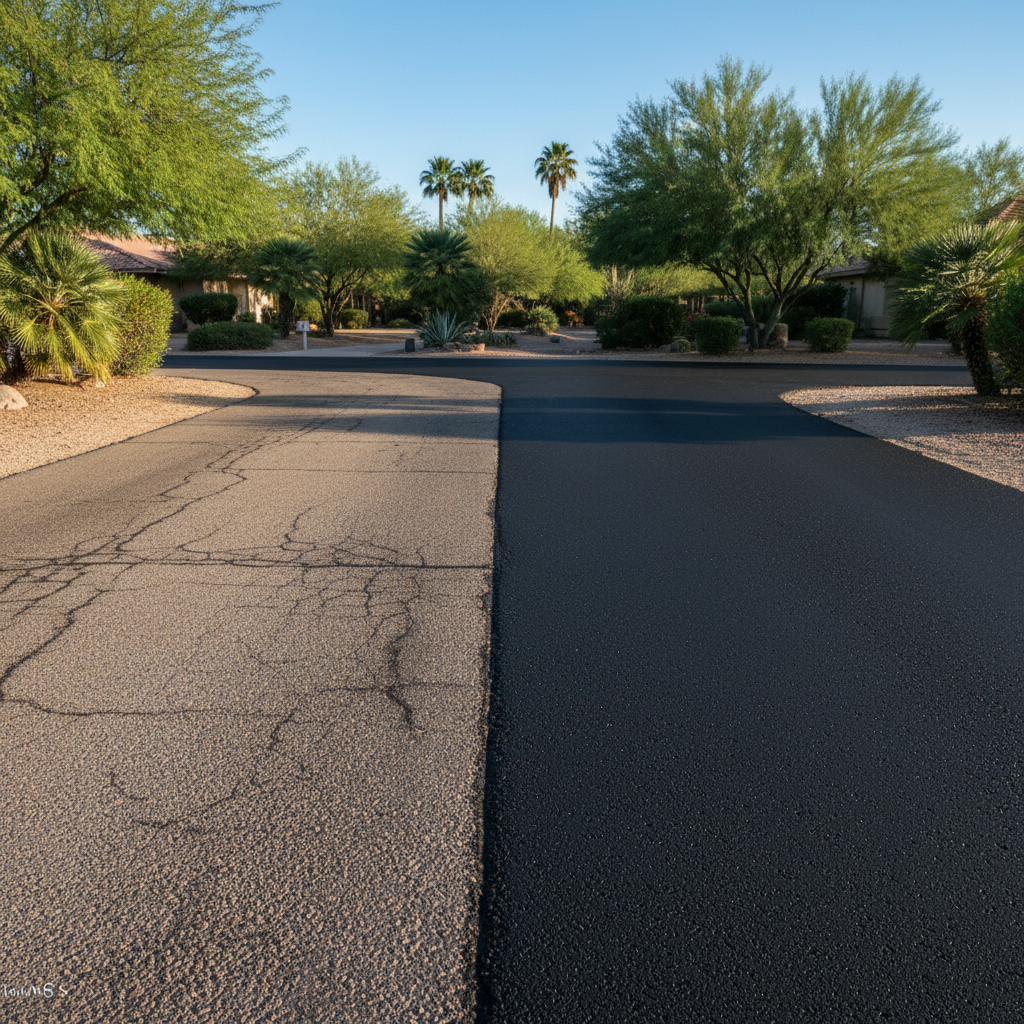
So, your parking lot or commercial driveway is looking pretty rough, huh? Cracks, potholes, maybe even some alligator cracking that's getting worse with every summer monsoon. You know it's time to do something, but what's the best approach? For commercial asphalt, you've generally got two main options: an asphalt overlay or a full depth replacement. Let's talk about which one makes sense for your Phoenix property.
What's an Asphalt Overlay?
Think of an overlay as putting a fresh new skin on your existing pavement. We're not tearing everything out. Instead, we'll prep the surface – fix any major potholes, mill down high spots, maybe even apply a leveling course – and then lay a new layer of asphalt right on top of the old one. It's like a big, thick re-pave.
Pros of an Overlay:
- Cost: This is usually the big one. Overlays are almost always less expensive than a full tear-out and replace. You're saving on demolition, hauling away debris, and some of the base work.
- Speed: It's a quicker process. Less time means less disruption for your business and your customers.
- Appearance: You get a fresh, smooth, dark surface that looks brand new. It definitely boosts curb appeal.
Cons of an Overlay:
- Underlying Issues: This is the crucial part. If the problems with your pavement go deeper than the surface – like a failing sub-base or drainage issues – an overlay is just a band-aid. Those cracks and problems will eventually reflect through the new layer. We call it 'reflective cracking.'
- Lifespan: While it extends the life of your pavement, it won't last as long as a completely new system. You might get 7-15 years, depending on the condition of the original pavement and traffic.
- Elevation Changes: Adding a new layer raises the height of your pavement. This can be an issue around drainage structures, curbs, and building entrances. Sometimes we have to mill down the existing asphalt to compensate, which adds to the cost.
What's Full Depth Replacement?
This is exactly what it sounds like. We tear out all the old asphalt, sometimes even the underlying aggregate base, and start from scratch. We'll re-grade the sub-grade, lay down a fresh, compacted aggregate base, and then pave with new asphalt layers. It's a complete rebuild.
Pros of Full Depth Replacement:
- Durability and Lifespan: This is the gold standard. When done right, a full depth replacement can last 20-30 years or even more, especially with proper maintenance. You're addressing all the problems from the ground up.
- Addressing Root Causes: If you've got drainage problems, a weak sub-base, or significant structural damage, this is the only way to truly fix it. We can re-engineer the entire system.
- No Reflective Cracking: Since you're starting fresh, you won't have old cracks coming back through the new surface.
Cons of Full Depth Replacement:
- Cost: It's significantly more expensive. Demolition, hauling, more material, more labor – it all adds up.
- Time and Disruption: It's a longer, more involved process. This means more downtime for your parking lot, which can impact your business.
- Environmental Impact: More waste goes to the landfill, though we do try to recycle as much of the old asphalt as possible.
Which One is Right for Your Phoenix Property?
For us here in Phoenix, the intense sun, extreme heat, and occasional heavy downpours can be brutal on asphalt. The soil conditions, especially the expansive clay soils we sometimes see in older neighborhoods like Arcadia or parts of Glendale, can also play a role in pavement failure. It's not just about what you see on the surface.
Here's my honest take:
- Choose an Overlay if: Your pavement's problems are mostly surface-level. You have minor cracking, fading, or shallow potholes, but the underlying base seems solid. You're looking for a cost-effective way to get a few more good years out of your pavement and improve its appearance. You need a quick turnaround with minimal disruption.
- Choose Full Depth Replacement if: You've got widespread, deep alligator cracking, significant potholes that keep coming back, standing water issues, or areas where the pavement is sinking or heaving. If your lot is experiencing heavy truck traffic or has been neglected for decades, an overlay won't cut it. You need a long-term solution and are willing to invest more upfront for decades of trouble-free pavement.
Ultimately, the best way to figure it out is to have a professional like us from Western Asphalt Solutions come out and take a look. We'll assess the condition of your existing pavement, look at the sub-base, and consider your budget and long-term goals. We'll give you an honest recommendation on whether an overlay will hold up or if you really need to bite the bullet and go for a full replacement. Don't just guess; let's get it right the first time.