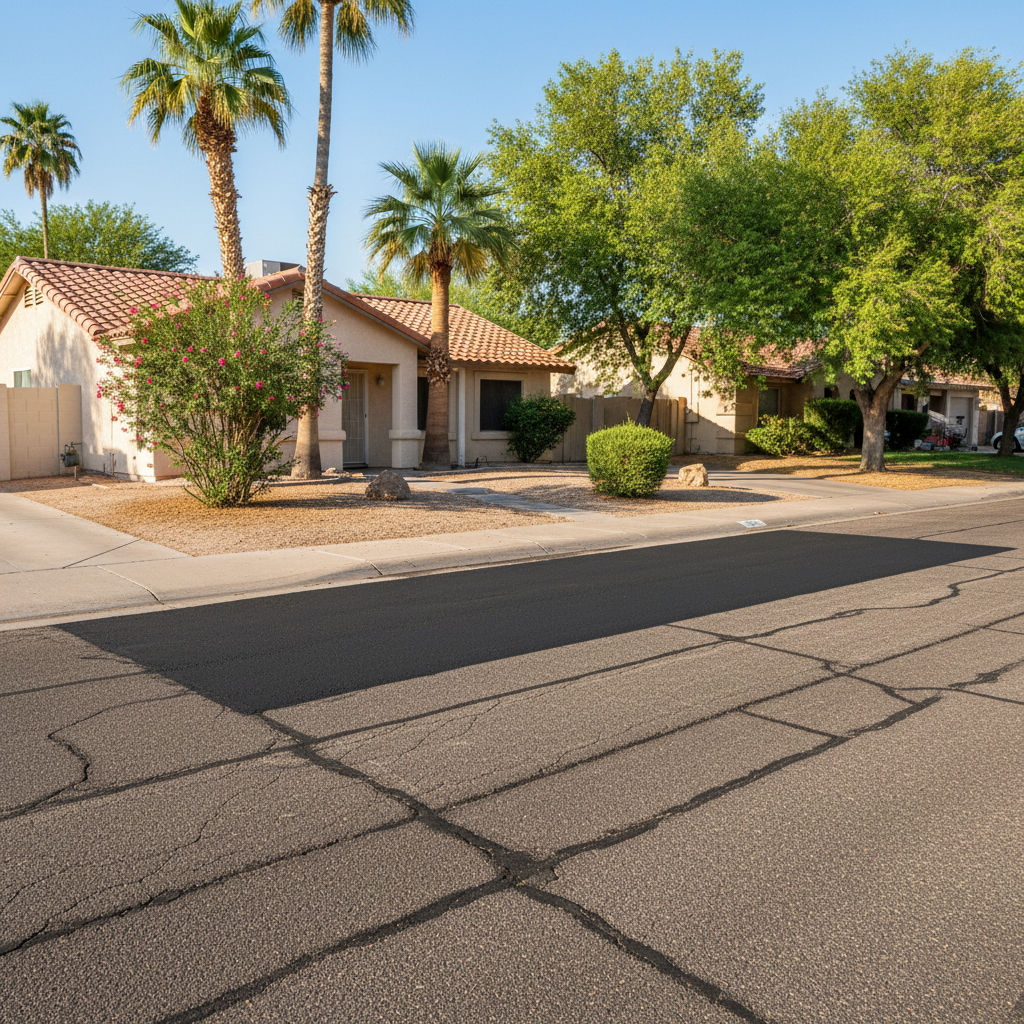
Got a pothole or a crumbling section of asphalt? You’re probably thinking, “Time for a patch.” And you’re right, patching is often the answer. But here in Phoenix, a patch isn't just a patch. Our unique climate and soil conditions mean that a slap-dash job just won't hold up. You need a fix that understands the desert, not one that’s designed for a rainy, temperate climate.
Why Phoenix Asphalt Needs Special Attention
Our heat, for starters, is no joke. You know it, I know it. That scorching summer sun bakes asphalt day in and day out. This extreme heat causes the material to expand, contract, and generally stress out a lot more than it would in, say, Seattle. Then you’ve got our monsoon season. Heavy, sudden downpours can quickly turn a small crack into a major washout, especially with our caliche-rich soil that doesn't drain like regular dirt. Water gets under the asphalt, softens the base, and boom – you’ve got a bigger problem than you started with.
I've seen it countless times, especially in older neighborhoods like those around Arcadia or even some of the industrial parks off I-10. A property owner tries to save a buck with a cheap, temporary patch. It looks okay for a few months, maybe even through a mild winter. But as soon as July hits, or we get a couple of those intense August storms, that patch just gives up. It cracks, crumbles, or sinks, leaving you right back where you started, but with a bigger headache and more money wasted. What a pain!
The Right Way to Patch Asphalt in the Desert
So, what’s the difference between a temporary band-aid and a lasting repair? It all comes down to understanding the underlying issues and using the right materials and techniques for our environment. You can’t just fill a hole and call it a day.
- Proper Preparation is Key: Before any new material goes down, you've got to clean out the area thoroughly. That means removing all loose debris, dirt, and any compromised asphalt. Sometimes, you need to cut out a neat, square section around the damage to ensure you're working with stable edges.
- Addressing the Base: This is huge. If the sub-base beneath your asphalt is compromised – maybe it’s wet, soft, or poorly compacted – any patch you put on top is doomed. We often have to dig deeper, compact the base material properly, and sometimes even add new aggregate before laying down new asphalt. Ignoring this is like building a house on sand.
- The Right Materials: Not all asphalt mixes are created equal. For patching, especially in our climate, you need a hot mix asphalt that's designed to be durable and flexible enough to withstand our temperature swings. Cold patch is fine for emergencies, but it’s not a permanent solution, especially for high-traffic areas.
- Compaction, Compaction, Compaction: Once the new asphalt is in place, it needs to be compacted correctly. This isn’t just about making it flat; it's about making sure the material is dense and tightly bound, which helps it resist water penetration and wear.
Common Patching Projects We See Around Phoenix
We handle all sorts of patching jobs, from small potholes to larger sections of failing pavement. You'll often see us working on:
- Commercial Parking Lots: Retail centers, office parks, apartment complexes – they all take a beating from heavy traffic and the sun. A well-maintained lot looks professional and prevents trip hazards.
- HOA Roads and Driveways: Many communities, from Glendale to Mesa, have private roads or shared driveways that need regular attention. Keeping these in good shape means happy residents and fewer liability concerns.
- Industrial Yards: Warehouses and distribution centers often have heavy truck traffic, which can quickly chew up asphalt. Durable patching is essential to keep operations smooth.
When you call Western Asphalt Solutions, you’re not just getting a crew with a truck and some asphalt. You’re getting folks who live and work here, who understand exactly what our Phoenix sun and monsoons do to pavement. We know the difference between a patch that’ll last and one that’ll fail, and we’re committed to doing it right the first time. Don't let a small problem turn into a major headache because of a cheap fix. Get it done right.