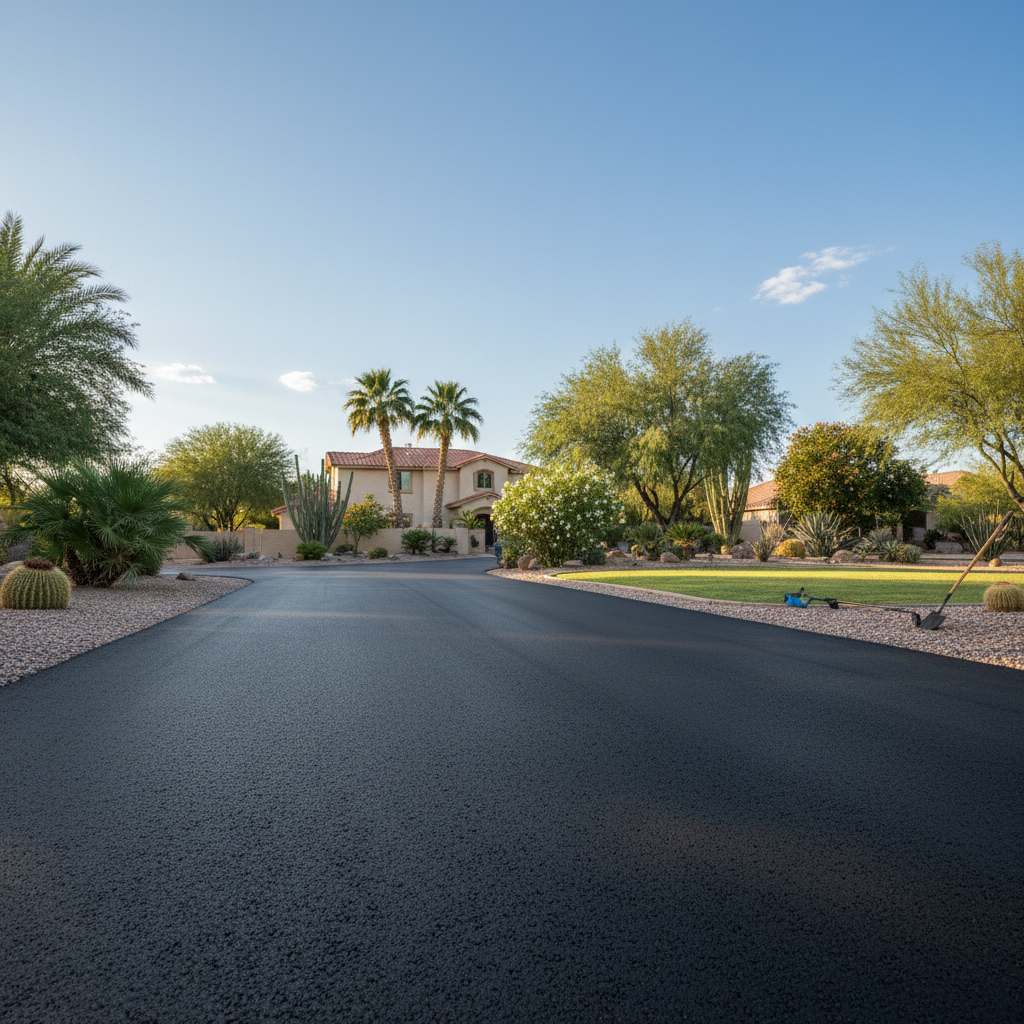
When's the best time to get your asphalt driveway or parking lot paved here in Phoenix? That's a question I get asked all the time, and it's a good one. You see, our unique desert climate isn't like other places. It doesn't just affect how often you water your saguaros; it directly impacts how asphalt cures, how long it lasts, and when we can even do the work.
Why Phoenix Weather Matters for Asphalt
Asphalt, at its core, is a mix of aggregate (like rocks and sand) and bitumen, which is a petroleum-based binder. Think of it like super-tough glue holding everything together. For that glue to work right, it needs to be applied and cure under specific conditions. Here in Phoenix, we've got two main challenges: extreme heat and monsoon season.
You might think hot weather is great for asphalt, and to a point, it is. We need warm temperatures for the asphalt to be pliable and for the binder to flow and compact properly. But there's a sweet spot. Too hot, and it can be a problem. The material can cool too quickly on the surface while staying hot underneath, making it hard to get a uniform compaction. Plus, it's just plain brutal for the crew working out there.
Rain, especially during our monsoon season, is another big no-go. You can't pave on wet ground. Period. The moisture prevents the asphalt from bonding correctly to the base, leading to premature failure, cracking, and potholes. We're talking about a significant investment here, so you want it done right the first time.
The Best Time to Pave in Phoenix
So, what's the sweet spot? For us, the ideal paving season in Phoenix is generally from late fall through early spring. We're talking October through April. During these months, the daytime temperatures are usually in that perfect 60-90 degree range. The ground temperature is stable, and we have a much lower chance of unexpected rain showers.
- Fall (October - November): The summer heat is finally breaking, and the ground has had a chance to cool down. It's often dry, and conditions are excellent for laying new asphalt or doing major repairs.
- Winter (December - February): These are typically our coolest months, but still well within acceptable temperature ranges for asphalt work. It's often very dry, making it a reliable time to schedule projects.
- Spring (March - April): As temperatures start to climb, we still have a good window. We're keeping an eye on the forecast, but generally, it's still prime time before the intense summer heat sets in.
We try to avoid scheduling large projects during the peak summer months, especially July and August. Not only is it incredibly tough on the crew, but the asphalt can behave unpredictably. If you absolutely need work done in the summer, we'll discuss the challenges and potential solutions, like working very early in the morning, but it's not ideal.
Protecting Your Asphalt Investment Year-Round
Once you've got that beautiful, smooth blacktop, you want to keep it that way. Here's what you can do:
- Sealcoating: This is your asphalt's sunscreen and raincoat rolled into one. Here in Phoenix, the sun's UV rays are relentless. They break down the binder in the asphalt, making it brittle and grey. Sealcoating every 2-3 years (depending on traffic and sun exposure) protects against UV damage, water penetration, and even minor fuel spills. It's like giving your asphalt a fresh, protective skin.
- Crack Sealing: See a crack? Fill it! Don't wait. Cracks are entry points for water, and once water gets under your asphalt, especially with our expansive clay soils found in areas like the West Valley, it can cause the base to erode and lead to bigger problems like potholes.
- Regular Cleaning: Sweep away dirt, debris, and oil spills. Oil and other chemicals can degrade asphalt over time.
- Proper Drainage: Make sure water isn't pooling on your asphalt. Good drainage is crucial to prevent water from sitting and seeping into the pavement.
At Western Asphalt Solutions, we're not just laying down asphalt; we're building surfaces that last in this unique environment. Understanding the climate and planning your projects accordingly makes all the difference. If you're thinking about a new driveway, parking lot, or just need some maintenance, give us a call. We'll help you figure out the best time and the best approach for your property.