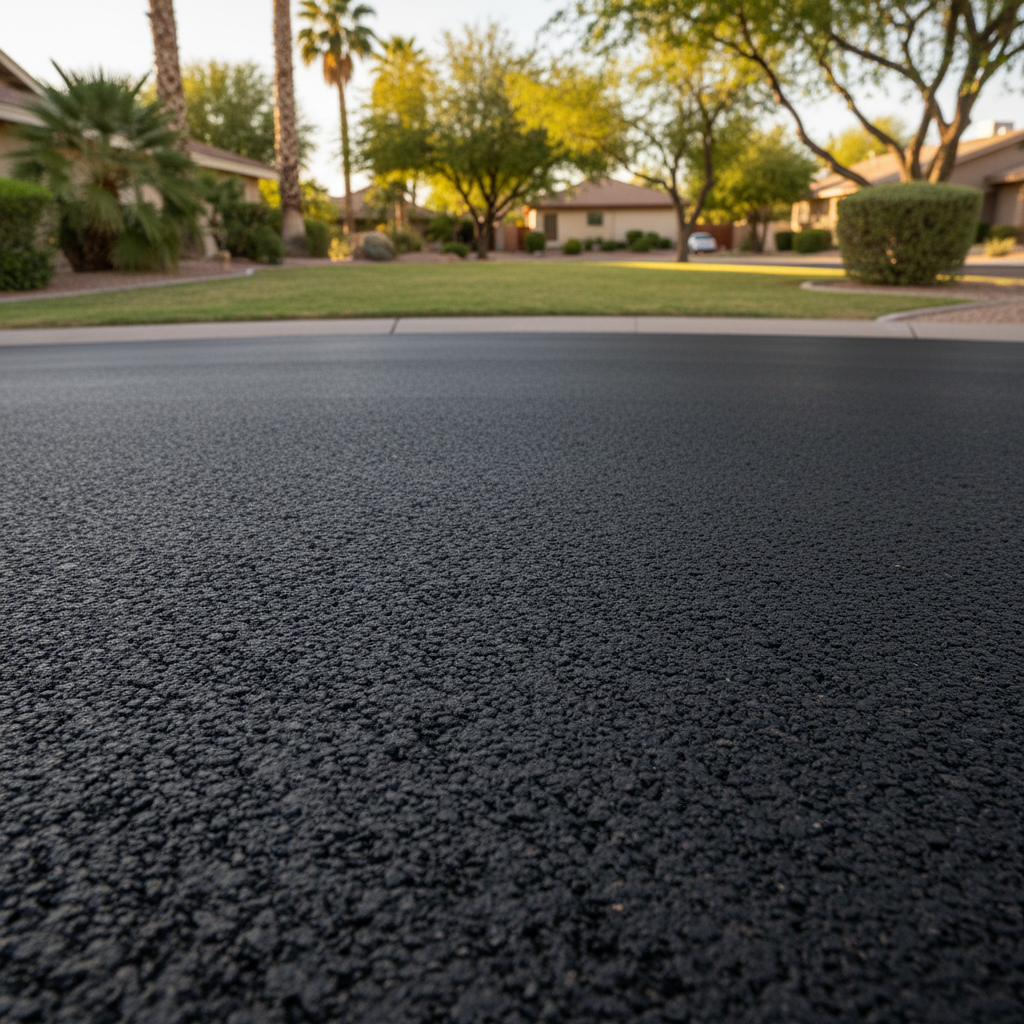
Alright, let's talk asphalt. I get a lot of the same questions from homeowners around Phoenix, from Scottsdale to Glendale, about their driveways and parking pads. It makes sense, right? You want to protect your investment, especially with our brutal sun. So, I figured I'd tackle the most common ones right here.
How long should a new asphalt driveway last in Phoenix?
This is a big one, and honestly, it depends on a few things. A properly installed asphalt driveway — and by that I mean one with a good, solid base, the right thickness of asphalt, and then maintained well — should give you a good 15 to 20 years here in Phoenix. Now, "maintained well" is key. That means things like sealcoating every few years and promptly fixing any cracks or potholes. Our intense UV rays and those extreme temperature swings — 115 degrees in July, then down to 40 at night in January — they really put a lot of stress on the material. If you neglect it, you'll be looking at repairs or replacement much sooner. Trust me.
What's the deal with sealcoating? Do I really need it?
You absolutely do. Think of sealcoating as sunscreen for your driveway. Asphalt is made with petroleum, and our desert sun bakes the oils right out of it. That's what makes it turn gray, brittle, and start cracking. A good quality sealcoat, applied correctly, puts those vital oils back in, protects against UV damage, and helps shed water. It also makes your driveway look brand new, which is a nice bonus. I usually recommend getting it done every 2-3 years, depending on traffic and how much sun your driveway gets. It's a small investment that drastically extends the life of your asphalt. Seriously.
Can I pave over my existing concrete driveway with asphalt?
Technically, yes, you can. But should you? That's a different question entirely. If your concrete driveway is in really good shape, with no major cracks or settling, an asphalt overlay can work. We'd need to make sure the concrete is super clean, and sometimes we'll use a tack coat to help the asphalt bond. The main concern, though, is that any existing cracks in the concrete will eventually reflect through the new asphalt layer. It's called "reflective cracking." If your concrete is already failing, you're just putting a band-aid on a bigger problem. We'd usually recommend removing the concrete and starting fresh with a proper asphalt base.
My driveway has a lot of cracks. Can they all be fixed?
Most cracks can be fixed, but the type of crack dictates the repair. Small, hairline cracks can often be sealed with a crack filler. This prevents water from getting underneath and causing more damage. Larger, alligator-style cracking (where it looks like alligator skin) usually indicates a more serious base issue or severe deterioration. For those, you might be looking at a patch repair, where we cut out the damaged section and replace it, or even a larger overlay if it's widespread. The important thing is to address them quickly. Water is asphalt's worst enemy, and our monsoon rains can quickly turn a small crack into a huge pothole if left unattended.
How long after paving can I drive on my new asphalt?
Patience is key here. For a newly paved driveway, you typically need to wait about 24 to 48 hours before driving on it. This gives the asphalt time to cool and harden. If it's a really hot day, like those 110-degree days we get in July and August, we might recommend waiting a little longer, maybe even 72 hours, especially for heavier vehicles. You want to avoid turning your wheels sharply in place during those first few days, as that can leave scuff marks or depressions. It's still a bit pliable, even if it feels solid.
What's the difference between asphalt and chip seal?
Good question, because people often confuse them. Asphalt paving is what you see on most roads and driveways: a smooth, black surface made from a mixture of aggregate (like rock and sand) and asphalt cement. It's durable, flexible, and provides a smooth ride. Chip seal, on the other hand, is a different beast. It's a layer of liquid asphalt followed by a layer of crushed stone chips, which are then rolled into the asphalt. This creates a rougher, textured surface. Chip seal is often used on rural roads or for a more rustic look. It's generally less expensive upfront than asphalt, but it's not as smooth, can be a bit dusty, and doesn't last as long as a well-maintained asphalt driveway. For most residential driveways in areas like Arcadia or Paradise Valley, asphalt is the preferred choice for its durability and aesthetic.
Why does my asphalt driveway have puddles after it rains?
Puddles, or "ponding," usually mean there's a drainage issue or the asphalt wasn't properly graded when it was installed. A well-designed driveway should have a slight slope, or "pitch," to direct water away from your home's foundation and off the paved surface. If you've got standing water, it's not just an annoyance; it's a problem that can lead to premature deterioration of your asphalt. Water sitting on the surface, especially in our heat, can soften the asphalt, and if it freezes (rare, but it happens), it can cause cracking. Sometimes it's a simple fix, like adding a small patch to raise a low spot, but sometimes it might indicate a larger grading problem that needs to be addressed during a repair or replacement. It's definitely something Western Asphalt Solutions can take a look at for you.