Walking out to a driveway in Ahwatukee during July and stepping into soft asphalt happens often in the Valley of the Sun. Summer surface temperatures easily blast past 140 degrees, which means pavement takes a hard beating year-round. Property owners looking at a crumbling or faded driveway and trying to figure out how to tackle it need a realistic plan. This guide breaks down what property owners can actually do around their property and when it is time to call Western Asphalt Solutions.
Before the Project: Prep Work and Reality Checks
Before a single truck shows up, there is homework to complete. Homeowners living in an HOA down in Gilbert or Chandler already know those associations have opinions on driveway colors and contractor signs. Checking those rules first makes sure no one gets slapped with a fine.
Property owners can definitely handle the initial site cleanup themselves. Pulling weeds from the edges, sweeping away debris, and mapping out where the water pools during rare monsoon downpours are all DIY-friendly tasks. Drainage is very important here. If water sits on your asphalt, it breaks down the binder fast.
What property owners should not do themselves is soil compaction testing or heavy grading. Phoenix caliche soil is notoriously stubborn and acts just like concrete. If the base is not graded right with proper slope and compacted with heavy machinery, brand-new pavement will crack and rut within 18 months or less. Property owners should leave the sub-base prep to the equipment operators at Western Asphalt Solutions.
During the Pave: Sweat Equity vs. Heavy Equipment
When paving day arrives, property owners should stay out of the way of the work area. Asphalt paving is a synchronized process of hot mix trucks, paving machines, and heavy steel-wheel rollers working in 110-degree ambient heat while the material is still 300 degrees.
Can you pave a full residential driveway by yourself with a shovel and a rented hand tamper? Absolutely not. You will end up with a lumpy, poorly compacted surface that crumbles at the edges. Western Asphalt Solutions sees DIY paving attempts gone wrong every month, usually after a homeowner tries to lay hot mix they picked up in the back of a pickup truck. It cools too fast, you cannot roll it right, and it fails.
Your job during the project is logistics and communication. Keep the neighbors informed if your project blocks a shared desert-subdivision cul-de-sac, keep pets locked inside, and make sure your sprinklers are turned off so they do not spray the hot asphalt mat.
After the Paving: Curing and Upkeep
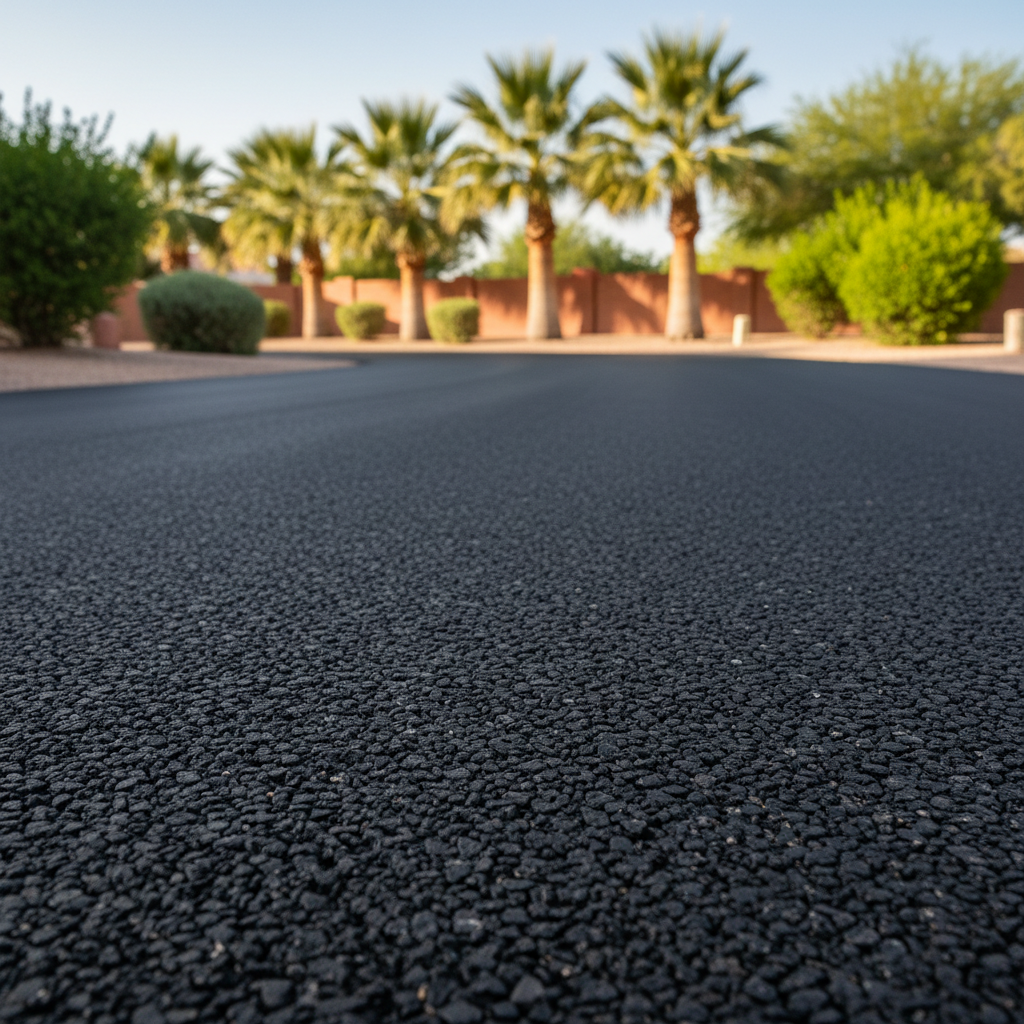
The crew rolls away, leaving behind a dark-black surface. Now your part kicks back in. Asphalt does not fully cure overnight; it takes time to harden completely, especially in our intense desert climate.
Keep foot traffic light for the first day, and keep vehicles off it for at least 3 to 5 days, or longer if it is peak summer. Parking a heavy SUV on fresh asphalt too early will leave permanent tire depressions.
Once it is fully cured, maintenance is key. Property owners can handle small crack sealing themselves once a year using a good rubberized pourable filler from the local supply yard. But do not wait until weeds are growing out of massive fissures. Stay on top of the maintenance, and your driveway will easily survive the Phoenix heat cycle for 15 to 20 years or more.