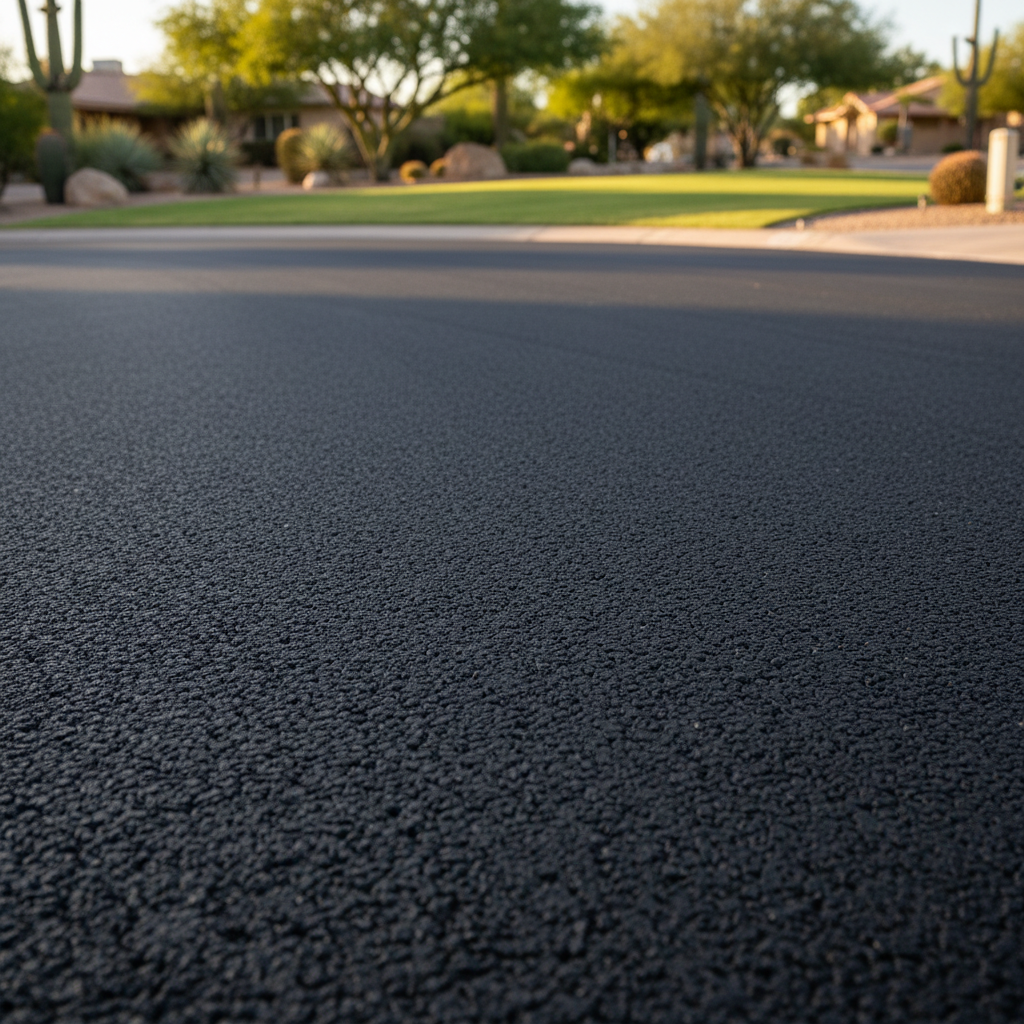
What's the best material for a Phoenix driveway, asphalt or concrete?
That's a question I hear all the time. Honestly, there's no single "best" answer for everyone; it really just depends on what you're looking for, your budget, and how much upkeep you're willing to do. Asphalt, which is our specialty here at Western Asphalt Solutions, is generally more flexible. And that's a big deal in Phoenix, especially with our expansive clay soils that can shift around and crack more rigid materials. Asphalt handles those ground movements better. Usually, it just gets small cracks that are much easier to fix than the bigger breaks you see in concrete. Plus, it's typically quicker to install and cure, so you can drive on it sooner.
On the flip side, concrete can last a bit longer if it's put in perfectly and you don't have much ground movement. Some folks might also think it looks a little more "upscale." But when concrete cracks, it's usually a bigger, more expensive repair. For most Phoenix homeowners, especially those in older neighborhoods like Arcadia or Sunnyslope with established trees and potential soil issues, asphalt often turns out to be the more practical and cost-effective choice in the long run. Just something to consider.
How long does a new asphalt driveway usually last in our Phoenix heat?
A well-installed asphalt driveway here in Phoenix, with the right maintenance, should easily last you 15 to 20 years. Sometimes even longer! That "proper maintenance" part is key, especially with our intense sun and monsoon rains. What does that mean? Getting it sealed every few years. The sun's UV rays are brutal on asphalt; they dry out the binders and make it brittle. Sealing protects it from that, and also from water seeping in. If you skip sealing, you'll see it fall apart much faster—cracks will pop up, and the surface will start to ravel. Think of it like sunscreen for your driveway. You wouldn't go out in July without it, right? Your driveway needs that same kind of protection.
Can I pave over an existing concrete driveway with asphalt?
You absolutely can, but there are some important things to think about first. We call this an asphalt overlay. The existing concrete needs to be in decent shape—not completely falling apart, for instance. We'd need to check it out for major cracks, heaving, or drainage problems before anything else. Any big issues in the concrete will eventually show through the new asphalt layer. We'll typically clean the surface really well, fill any large cracks, and sometimes put down a tack coat to help the new asphalt stick better. It's a good way to get a fresh, smooth surface without the cost and disruption of ripping out all the concrete. It also adds a bit of flexibility to the driveway, which can be a plus. It's a common solution for folks who want the benefits of asphalt without the full tear-out hassle.
What's the deal with drainage? How does that affect my driveway?
Drainage is huge. Probably one of the most overlooked parts of paving a driveway. Water is asphalt's enemy, especially standing water. If your driveway isn't sloped correctly, water will pool up, seep into the asphalt, and eventually cause potholes, cracks, and general deterioration. Here in Phoenix, when those heavy monsoon downpours hit, a good drainage plan is critical. We always make sure the driveway is graded to push water away from your house and foundation, directing it toward proper drainage areas like street gutters or landscaped beds. Sometimes that means putting in French drains or catch basins, particularly if your property has a tricky slope or you're in a low-lying area. We're not just laying down asphalt; we're engineering a surface that will stand up to our unique weather patterns.
How long does it take to install a new asphalt driveway, and when can I drive on it?
The actual paving process for a typical residential driveway usually only takes a day or two. That depends on its size and how complicated it is, of course. This includes getting the base ready, laying the asphalt, and compacting it. The biggest variable is often the prep work—if we're doing a full tear-out and base replacement, that adds time. Once the asphalt is laid, you can usually walk on it within a few hours. For driving, we generally tell people to wait 24 to 48 hours. The asphalt needs that time to cool and harden completely. Driving on it too soon, especially with heavy vehicles or making sharp turns, can cause ruts or tire marks. It's like letting fresh concrete cure; patience pays off for a durable finish. We'll give you specific instructions for your project, but that's a good general guideline.
What kind of ongoing maintenance does an asphalt driveway need in Phoenix?
Beyond the initial installation, regular maintenance is what keeps your asphalt driveway looking good and lasting a long time. The most important thing, as I mentioned, is sealcoating. I recommend getting it done every 2-3 years. It protects against UV rays, water, and oil spills. You'll also want to take care of any cracks as they show up. Small cracks are easy and inexpensive to fill; if you let them go, they'll widen, let water in, and turn into bigger problems like potholes. Keep it clean too—sweep off debris, especially after a dust storm, and quickly clean up any oil or gas spills. Our Phoenix sun and occasional heavy rains are tough on everything, so a little proactive care goes a long way in making your driveway last longer and saving you money down the road.